Enhance the Omnichannel Customer Experience

Introduction
In this chapter, we’ll explore how to bring your commercial operations to life and how to support customers after the sale has been completed. Selling is only one part of a Retail Sales Associate’s role, supporting, guiding, and retaining customers over time is just as essential.
So, are you ready to put customers in the best position to buy, to feel supported, and to stay loyal over the long term?
Contribute to Commercial Operations Across Multiple Channels
Your journey with NexTrendish continues. You’re becoming increasingly familiar with the company’s culture, especially its commitment to delivering an exceptional customer experience.
You now play an active role in running commercial operations across in-store and online channels. Your mission: create personalized interactions and ensure a seamless, high-quality post-purchase experience. Every contact with a customer is an opportunity to build loyalty and offer services that truly meet their needs.
In-Store Commercial Events
José, your Sales Manager, wants you to understand the importance of in-store commercial events. These events can significantly boost a store’s performance. Based on his experience, in-store activations can:
Create direct, personal interaction with customers;
Offer an immersive, sensory experience;
Attract new customers and increase foot traffic;
Drive immediate or short-term sales;
Strengthen brand awareness and image;
Differentiate the brand from competitors through originality;
Build long-term loyalty and improve customer relationships.
In-store events help attract, engage, and retain customers by transforming the shopping experience into something memorable. They combine human interaction, sensory engagement, and interactivity a powerful mix that pure e-commerce cannot easily match.
To create a successful in-store activation — where customers physically participate — many options are available.
Still, today’s customer expectations go far beyond the physical space alone. José explains that strong activations often combine physical and digital elements to create an even more immersive and complete experience.
Digital Commercial Activations
Digital activations have become essential in any omnichannel strategy. According to José, they offer key advantages:
Reach a wide audience and increase online traffic
Optimize costs and improve efficiency.
Benefit from real-time tracking and flexibility.
Boost customer engagement through personalization and interaction.
Drive short-term online sales.
Strengthen brand visibility and innovative image.
Collect data to refine future strategies.
Create virality through user-generated content
Digital activations attract large audiences, enhance customer relationships, and offer high scalability. Their primary goal is to increase visibility, drive sales, and build loyalty through personalized interactions and immersive experiences. They integrate naturally into an omnichannel journey, connecting physical and digital touchpoints to offer a seamless customer experience.
With so many possible options, you may wonder what NexTrendish decided to implement to launch its new eco-friendly collection. Here’s the plan José unveils:
We’re organizing a private in-store event for loyalty-program members who have spent at least €150 over the past 12 months.
During this VIP evening, we will host a mini fashion show to present the new collection and create a memorable moment.
For those unable to attend, we’re also inviting influencers to our Paris store. We’re asking them to livestream the event and share a promo code offering their audiences the same purchasing benefits as our VIP guests.
We’ll be communicating ahead of time — across our digital channels, in stores, and through our invited influencers.
Now let’s look at how NexTrendish strengthens customer relationships across digital channels.
Maintain Customer Relationships Through Digital Channels
NexTrendish’s omnichannel strategy helped attract many new customers. But acquiring customers is only the beginning. Long-term success comes from retaining customers, especially in an omnichannel environment where touchpoints multiply and expectations rise.
Why invest so much effort into customer loyalty? Wouldn’t it be simpler to just acquire more customers?
It depends on the type of product. A homebuilder, for instance, cannot rely on repeat purchases. But in most industries, especially retail, retention is far more profitable than acquisition.
Keeping customers engaged requires ongoing communication. And digital channels are excellent tools for maintaining relevant, personalized, value-added interactions at every stage of the journey.
Here is an example of a NexTrendish post-purchase SMS:
Hi [First name], thanks for your NexTrendish purchase! 🎉 We hope you love your new items. You can share your review here: [review link].
Need help? Our customer support team is available at [number].
Enjoy 10% off your next purchase with code THANKYOU10 💖
Reply STOP to unsubscribe.
And here is a personalized “win-back” email for customers who haven’t made a purchase in over nine months:
Hello [First name],
It’s been a while since we last saw you at NexTrendish, and we miss having you with us! We hope you’re still enjoying your last purchase — our newest collections are even better, and we’d love to welcome you back.
Enjoy 15% off your next order using code COME15, valid online and in store.
Offer expires: [insert date]
Don’t miss our eco-friendly arrivals 🌿 — check them out here: [collection link]
Need help? Our team is here at [number] or [customer service email].
See you soon,
The NexTrendish Team
[social links]If you prefer not to receive future emails, you can unsubscribe here [unsubscribe link]. We’d still be happy to see you in store or online anytime.
Even with a solid retention strategy, some customers will still experience issues — and may submit complaints. Let’s look at how to handle these situations professionally.
Handle Post-Purchase Customer Complaints
A post-purchase complaint occurs when a customer expresses dissatisfaction after making a purchase. Causes may include:
A defective or incorrectly described product;
Delivery issues (delay, damaged package);
Poor customer service or disappointing online experience;
Billing errors;
Lack of follow-up or missing information.
Complaints are important signals. When handled well, they become opportunities to correct issues and strengthen customer loyalty.
Depending on the situation, your level of expertise, and company policies, some complaints can be handled directly while others must be escalated to a specialized team. Escalation ensures each issue is handled by the right person.
Complaints can be submitted through several channels:
Email or contact form
Phone support
Social media
Live chat or chatbots
In-store returns (in an omnichannel experience)
To maintain trust, it’s essential to follow a structured approach:
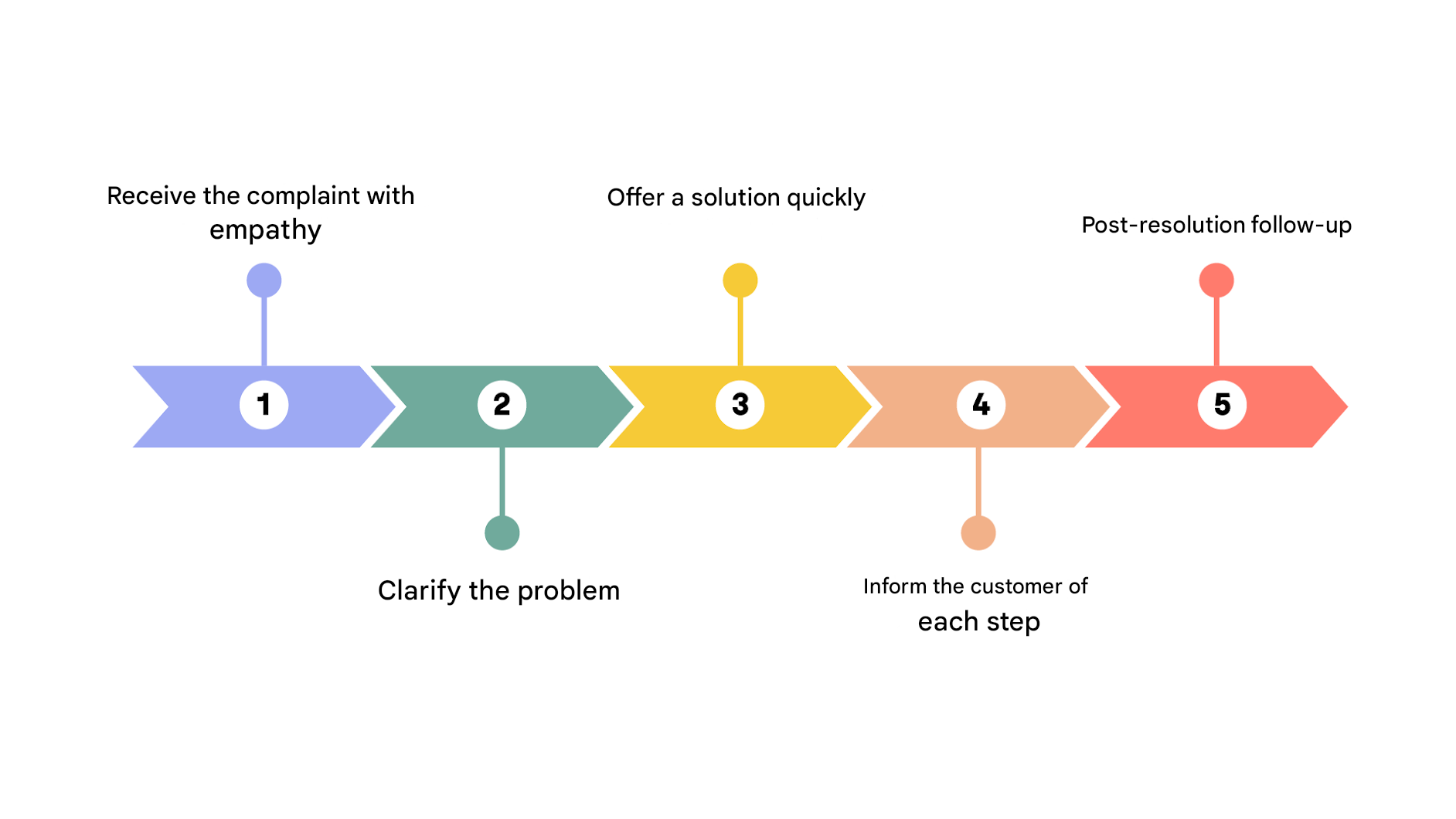
1. Show empathy
Listen actively and acknowledge the customer’s frustration.
Phrases like “I understand how frustrating this must be” help de-escalate tension.
2. Clarify the issue
Ask questions to fully understand the problem (“Can you tell me more about what happened?”).
3. Provide a timely solution
Options may include exchanges, refunds, repairs, or gestures of goodwill.
Act quickly to reinforce the customer’s value to the brand.
4. Keep the customer informed
Communicate progress regularly by email, text, or phone.
Be transparent about timelines.
5. Follow up after resolution
Check in to confirm that the customer is satisfied with the outcome.
A thank-you message or small gesture reinforces loyalty.
Update Digital Customer Records
The digital customer record, usually managed through a CRM, centralizes all essential information. Keeping this data updated is crucial for accurate, personalized customer interactions.
Customer records include:
Type of Information | Details |
Contact information | Name, email, phone number, mailing address |
Interaction history | Calls, emails, in-store visits, website activity, complaints |
Purchase history | Products purchased, dates, amounts, frequency |
Preferences | Preferred categories, preferred communication method |
Online behavior | Pages visited, abandoned carts, viewed items |
Loyalty program | Points, rewards, tier status |
Segmentation | Marketing segment (age, location, product category) |
Complaints & returns | Issues reported, solutions provided |
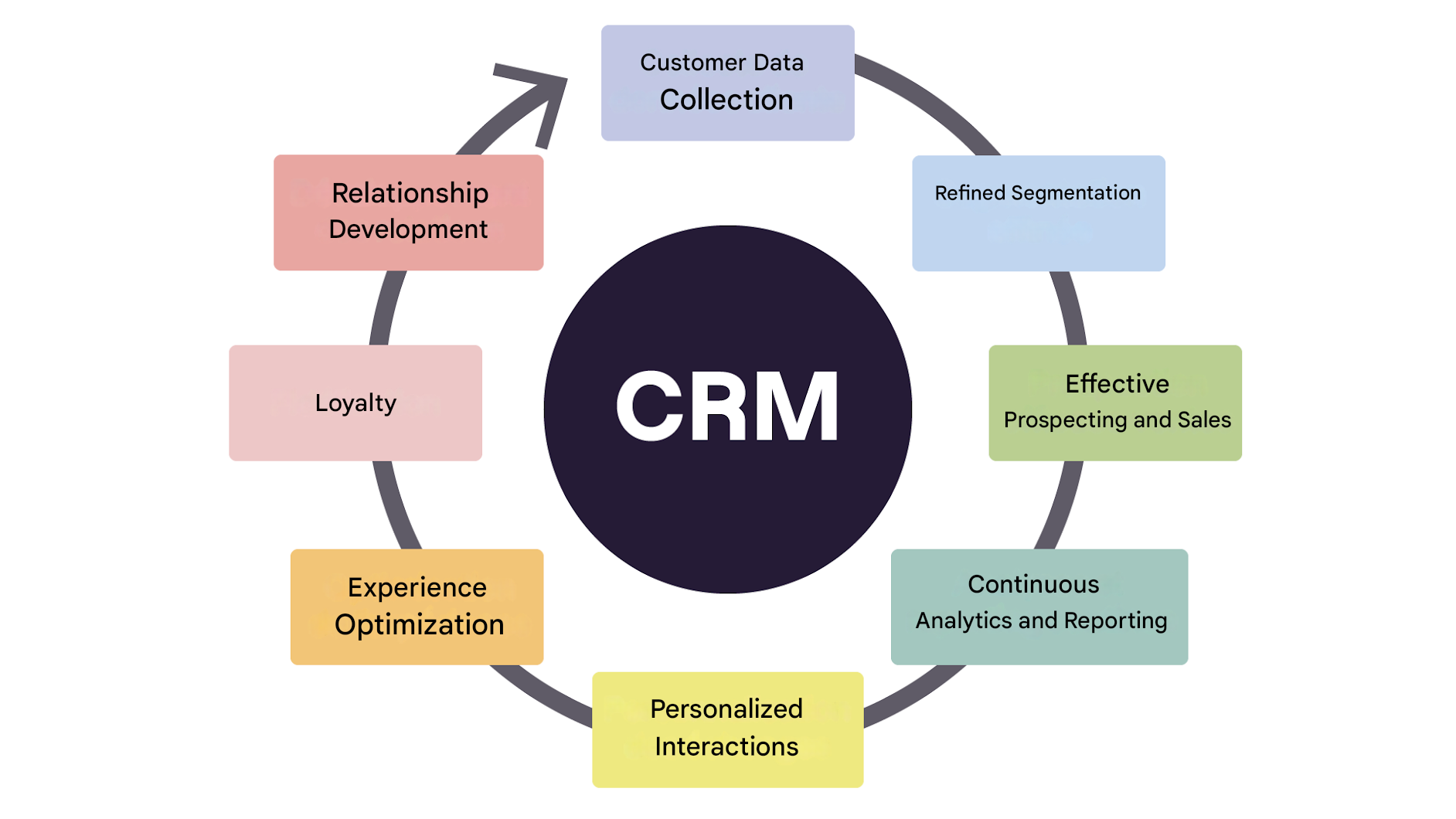
But even the best CRM is only effective when employees update it consistently. José explains that many prioritize “valuable” tasks over CRM updates, a mistake that weakens the entire omnichannel strategy.
To raise awareness, José created a table summarizing the importance of proper CRM usage:
Issue | Why it matters | Example |
Personalization | Accurate data enables customized messages and offers. | If a customer recently purchased an item, suggest complementary products. |
Customer satisfaction | Understanding interaction history helps anticipate needs. | Respect preferred contact methods. |
Marketing optimization | Better segmentation leads to more precise campaigns. | Re-engage inactive customers with relevant promotions. |
Data-privacy compliance | Updating files ensures compliance with regulations. | Remove customers who opt out of communications. |
Loyalty programs | Accurate data improves reward tracking. | Notify customers when they’re close to earning a reward. |
Sales performance | Reliable data reveals high-value customers. | Create exclusive VIP offers. |
Over to You!

Context
A customer ordered a jacket from the NexTrendish e-commerce site but received the wrong size. They email you to request an exchange.
Here is the customer’s email:
Subject: Exchange request – Incorrect size received
Hello,
I am contacting you regarding order #300323T placed on October 5. I received the “EcoFlex” jacket today, but unfortunately it is the wrong size. I ordered a size M but received a size L.
Could you please tell me how to proceed with an exchange? I would like to receive the correct size as soon as possible.
Thank you in advance.
Bastien CANEY
Instructions
Your manager, Sonia, has paired you with Robin to help you both progress together. Robin drafted a response but is unsure whether it’s appropriate. He asks you to review it before sending.
Here is Robin’s email:
Subject: Response to your exchange request
Hello,
Sorry for the inconvenience. If you received the wrong size, you will need to return the item to us by mail. Once we receive the parcel, we will process your exchange request. We cannot guarantee the exchange timeline, as it depends on stock and processing delays.
Thank you for your understanding.
Customer Service
What do you think of this response? What could be improved?
Summary
Understanding each customer is essential for the business.
To do this, you must track as much information as possible (within legal boundaries), including purchases and reactions.
CRM tools help centralize this data and automate tasks.
Personalization strengthens customer relationships.
Personalization is key to successful activations, complaint handling, and customer loyalty.
Now that you understand the foundations of a seamless omnichannel customer experience, let’s focus on creating attractive in-store environments in the next chapter!