Take Part in Organizing and Enhancing the Attractiveness of Sales Spaces

Introduction
As we saw in the previous chapter, customers must always be at the center of the business strategy. They should receive the best possible experience — not only through warm, attentive interactions across all channels, but also through a well-designed, functional, and visually appealing sales floor.
An effective retail space must offer products that are available, easy to find, and attractively presented. In this chapter, you’ll learn how Retail Sales Associates contribute to operational excellence by managing incoming merchandise, preparing items for display, and applying merchandising standards.
Receive Incoming Goods
Even though omnichannel systems allow customers to order items that aren’t physically in stock, it’s always best when a customer can leave the store with the product they want. That means you need stock available — both in the stockroom and on the sales floor.
Your experience at a NexTrendish store continues. To help you become familiar with the assortment, Elhora, the Store Manager, asks you to handle the next incoming shipment.
She explains that deliveries may arrive for several reasons:
An order placed by an in-store Sales Associate;
Automated inventory management triggering replenishment;
A shipment initiated by headquarters or the warehouse.
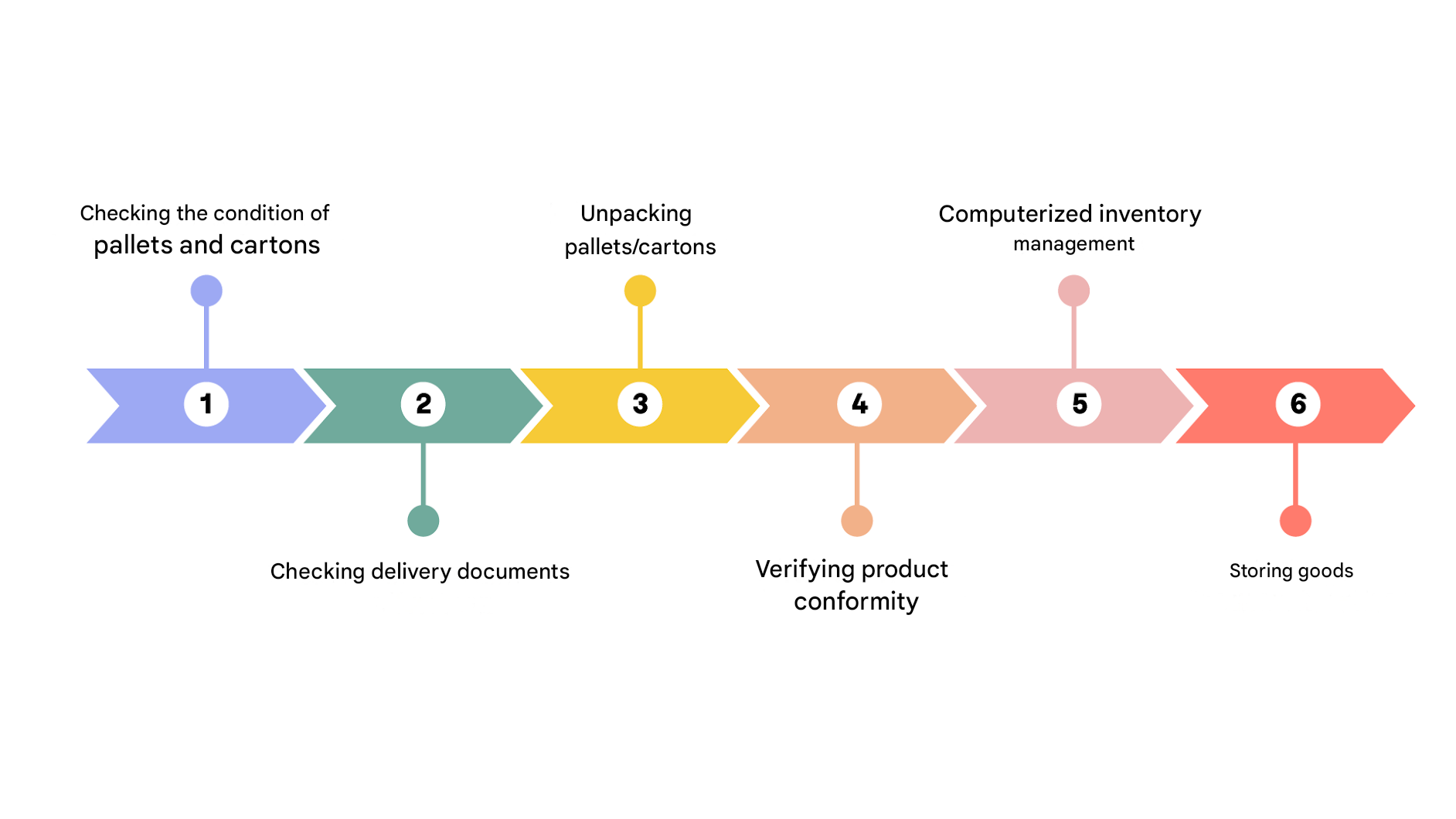
Regardless of the source, the procedure remains the same. When the delivery driver arrives, you walk through the inbound process step by step:
Step | Description |
1. Inspect pallets and cartons | Check that all items arrive in good condition. If a box or pallet looks damaged, record the issue. |
2. Verify delivery documents | Confirm that the delivery slip, purchase order, or invoice is correctly addressed and that quantities match. If everything aligns, you can sign for the delivery. Otherwise, report discrepancies immediately. |
3. Unpack pallets and cartons | Carefully open boxes to avoid damaging the merchandise. |
4. Check product conformity | Verify that received products match the order: quantity, quality, and product references. This can be done manually, with a barcode scanner, or through automated systems. |
5. Update inventory systems | Use your digital tools to validate stock entries and update the available quantities. Report any issues such as missing, damaged, or excess items to the warehouse or headquarters. |
6. Store merchandise | Place items in the designated stockroom locations. For temperature-sensitive goods (e.g., food, pharmaceuticals), always follow strict cold-chain procedures. |
Prepare Products for Shelving
Now that the items are physically in front of you, and digitally recorded as in stock — you can prepare them for the sales floor.
Here are your tasks:
Step | Actions |
Label items | Add labels: Ensure each product has the correct price label and legally required information. Price accuracy: Double-check that all displayed prices are current and compliant with regulations. |
Install security devices | For high-value or sensitive items, attach anti-theft devices (security tags, hard locks). Make sure they don’t affect product appearance or the customer experience. |
Optimize visibility & accessibility | Customer-ready setup: Prepare items so they will be easy to see and reach once placed on the sales floor. Organize by size, color, or product families. Spotlight key items: Identify products that will go in high-visibility zones (new arrivals, promos). |
For these products, make sure to:
Follow cold-chain procedures;
Differentiate between “Best Before” (quality decreases after this date) and “Use-By” (product becomes unsafe);
Remove expired products from sale;
Use appropriate stock-rotation methods to limit loss.
Arrange Products Using Merchandising Techniques
Simply placing products on shelves isn’t enough — effective merchandising helps catch shoppers’ attention and boosts sales.
While independent boutiques may rely on personal taste, a structured retailer like NexTrendish uses merchandising experts who analyze marketing data, customer insights, and test experiments to design layouts that optimize the shopping experience.
Your role as a Retail Sales Associate is to apply these techniques consistently.
To help you become familiar with the space, Elhora shares the store’s layout plan.
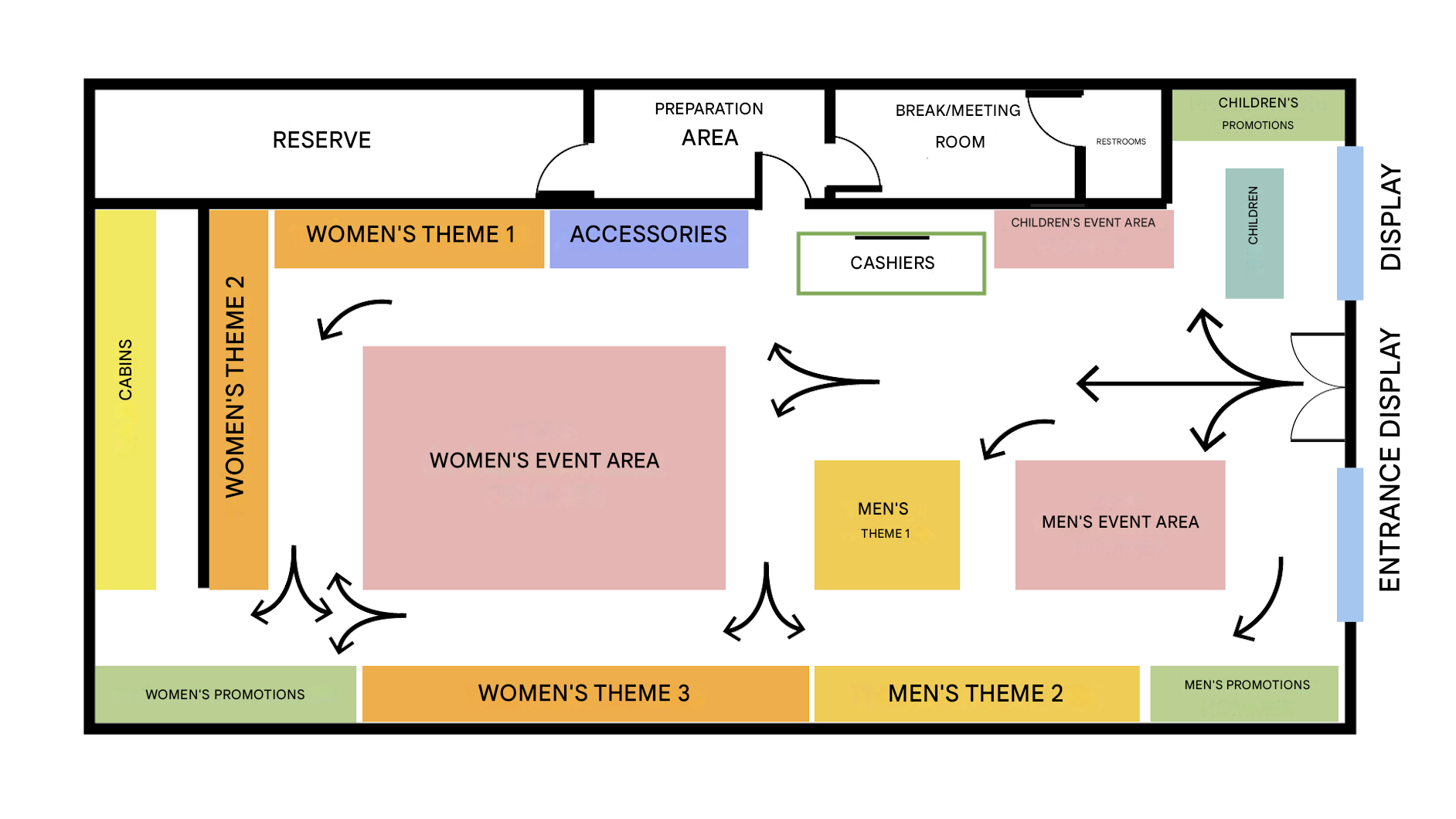
Once you understand the store’s flow, Elhora provides the planogram, a more detailed guide for product placement.
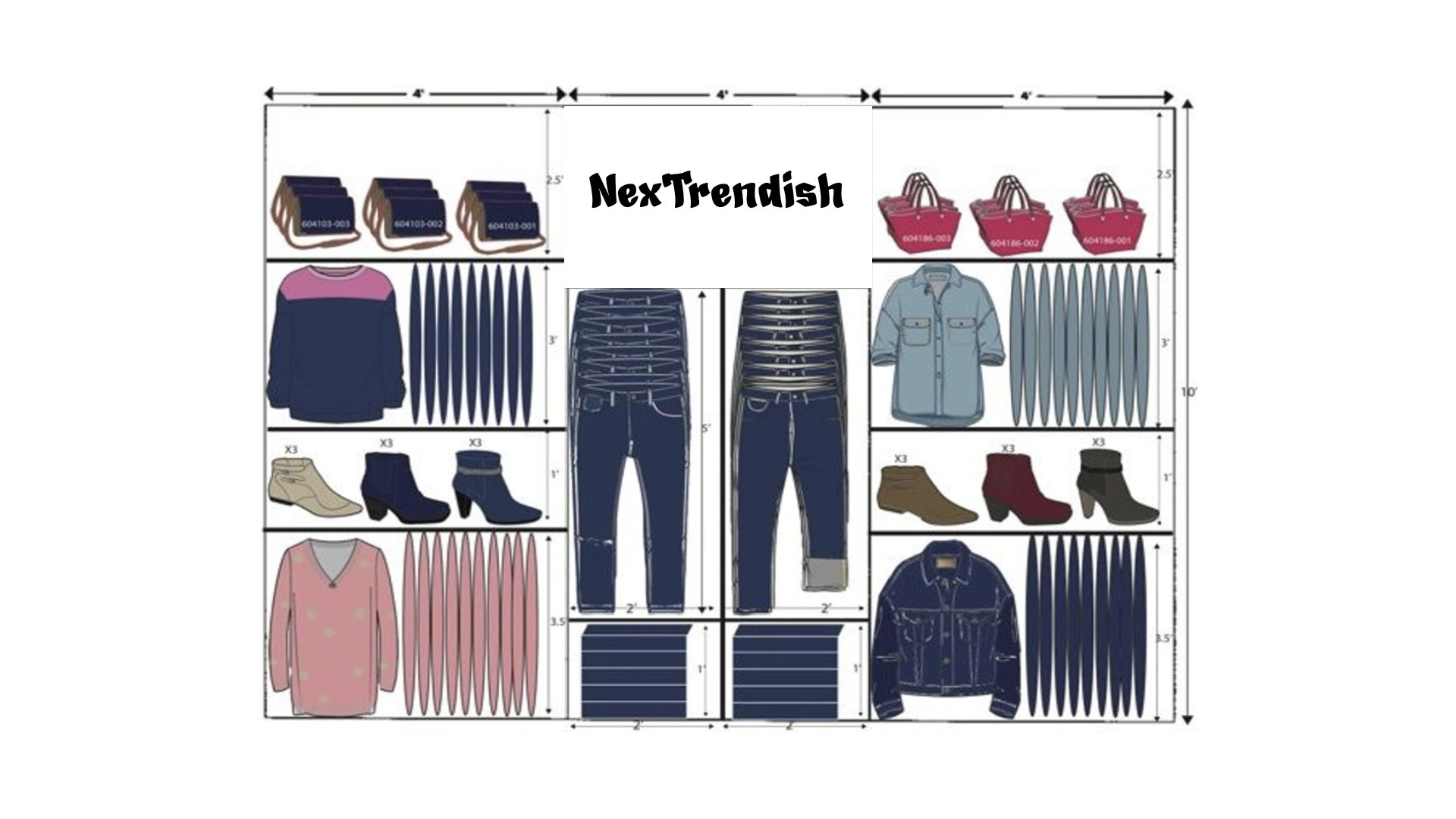
As you begin setting up the store, Elhora shares essential merchandising principles:
Principle | Description |
Visibility | Place popular items at eye level. Use appropriate lighting to highlight key products. |
Accessibility | Ensure smooth traffic flow. Organize complementary products together. |
Consistency | Apply the same merchandising standards throughout the store. Reinforce the brand’s visual identity. |
Product focus | Highlight key items (new arrivals, promotions) in strategic spots. Create themed zones when appropriate. |
Product rotation | Use FIFO (First In, First Out) for perishable or dated items. Adjust placement based on customer flow. |
Clear information | Ensure price labels and product information are visible and readable. Offer demos or samples when appropriate. |
Cleanliness & upkeep | Keep shelves tidy and restock regularly. |
Customer feedback | Listen to feedback and adjust layout when needed. |
Create an Effective Window Display
Next, you’ll prepare the store’s window display using its dedicated planogram.
Window displays typically aim to:
Attract passersby and encourage store entry;
Highlight flagship or seasonal products;
Reinforce brand identity through visual storytelling.
Point-of-Sale Information (POSI)
While arranging shelves, you notice signage and QR codes. Curious, you ask Elhora about them.
These are what we call Point-of-Sale Information. The QR codes link customers to additional content — videos, product comparisons, reviews. They reassure shoppers and help them make informed choices.
Curiosity is a great habit in retail — always observe what others do, listen to customers, and apply the smartest ideas.
Keep Shelves Clean, Organized, and Appealing
Proud of your work, you admire the neatly organized shelves. But as soon as customers arrive, items are touched, moved, and occasionally misplaced. This is normal — and even desirable — because handling products is part of the customer experience.
Should we prevent customers from touching items or give them products directly?
Of course not. Customers should feel free to explore. Shoppers rely on multiple senses when making a purchase:
Smell (candles, perfumes)
Hearing (audio products)
Taste (sampling in grocery contexts)
Sight (colors, patterns)
Touch (texture of fabrics, feel of devices)
At NexTrendish, sensory interaction is part of the experience — lighting, fragrance diffusers, music, product staging… everything is designed to immerse the customer.
So how do we maintain order?
By continuously recovering the space. Depending on customer traffic, this may be done throughout the day or at key moments.
These elements will ensure an attractive, functional, and secure sales space, while meeting quality and security requirements.
Over to You!

Context
The holiday season is approaching, and NexTrendish expects significant traffic. However, one store has been underperforming and is currently understaffed. To help turn things around, José assigns you to support Thomas, the Store Manager.
Analysis shows that most of this store’s customers are men. When you arrive, you notice that the layout does not follow NexTrendish standards — likely due to high turnover, as five different managers have rotated through the store in the last two years.
With holiday collections arriving, you propose redesigning the layout. Thomas agrees, under three constraints:
The total number of themes must remain the same.
Each customer segment must retain a promotional zone.
Each segment must have an event zone.
You may reorganize anything except the building’s physical structure (walls, windows, doors).
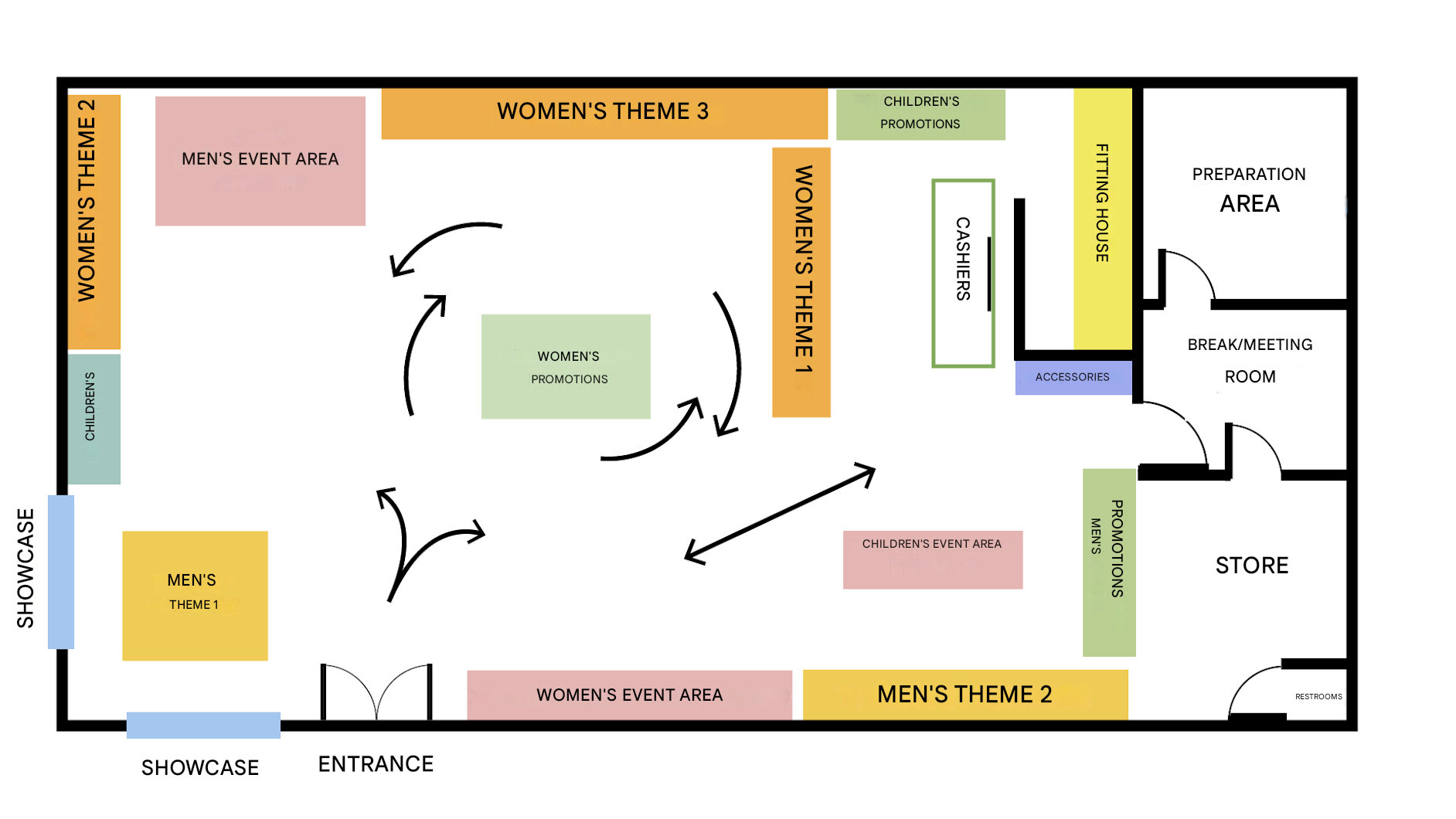
Here is the current store layout:
Instructions
What issues can you identify in the current layout?
Propose a new layout plan that respects Thomas’s constraints.
Summary
Accurate receiving procedures are essential — they are the starting point of all store sales.
A stockout can significantly harm business performance.
A well-designed layout plan guides customers and increases sales.
The planogram ensures each product is displayed in the optimal location.
Maintaining order and cleanliness is just as important as the initial setup.
Your store is now ready to welcome customers! In the next and final chapter, you’ll learn how to advise customers effectively, tailor your sales approach to their expectations, and build long-term loyalty.