Contribute to Omnichannel Prospecting and Customer Relations

Introduction
Sales is often described as one of the world’s oldest professions. For as long as people have exchanged goods, bartered, negotiated, or traded, the salesperson has played a central role. Of course, the role has evolved dramatically over time. Today, customers interact with businesses across multiple channels — in-store, online, over the phone — and they expect far more than someone who simply hands them a product. They want a knowledgeable advisor who can guide them through their purchase decisions.
Selling is only one dimension of a Retail Sales Associate’s role. To succeed, you must also know how to listen actively, offer guidance, reassure customers, handle occasional conflicts, and — above all — create an experience that builds trust and long-term loyalty with the brand.
In practice, a Retail Sales Associate is responsible for:
Welcoming customers and guiding them through their buying journey;
Advising customers and completing sales;
Carrying out prospecting activities;
Using and maintaining the company’s customer database;
Organizing and contributing to the setup of an engaging sales floor;
Mastering all customer contact channels to deliver a seamless and satisfying omnichannel experience.
These are the core responsibilities we will explore throughout this chapter and the rest of the course.
Identify the Different Customer Lifecycle Stages
As you’ve already seen, Retail Sales Associates are true customer-relationship specialists. Their role extends across the entire customer lifecycle, helping customers at every stage of their relationship with the business.
What is the customer lifecycle?
The customer lifecycle represents the different stages a customer goes through in their relationship with a business. Here’s a simple breakdown:
Acquisition: The customer discovers the business — through advertising, marketing, or word of mouth — and makes an initial purchase.
Activation: The customer uses the product or service for the first time. Their first experience influences everything that follows.
Retention: If satisfied, the customer continues using the product or returns to buy again. This stage is essential for building loyalty.
Expansion: The customer increases their usage or purchases additional products or services. They become more valuable to the business.
Advocacy: A loyal customer recommends the business to friends or colleagues, contributing to new customer acquisition.
Disengagement: At some point, the customer may stop purchasing or using the product due to changing needs or dissatisfaction.
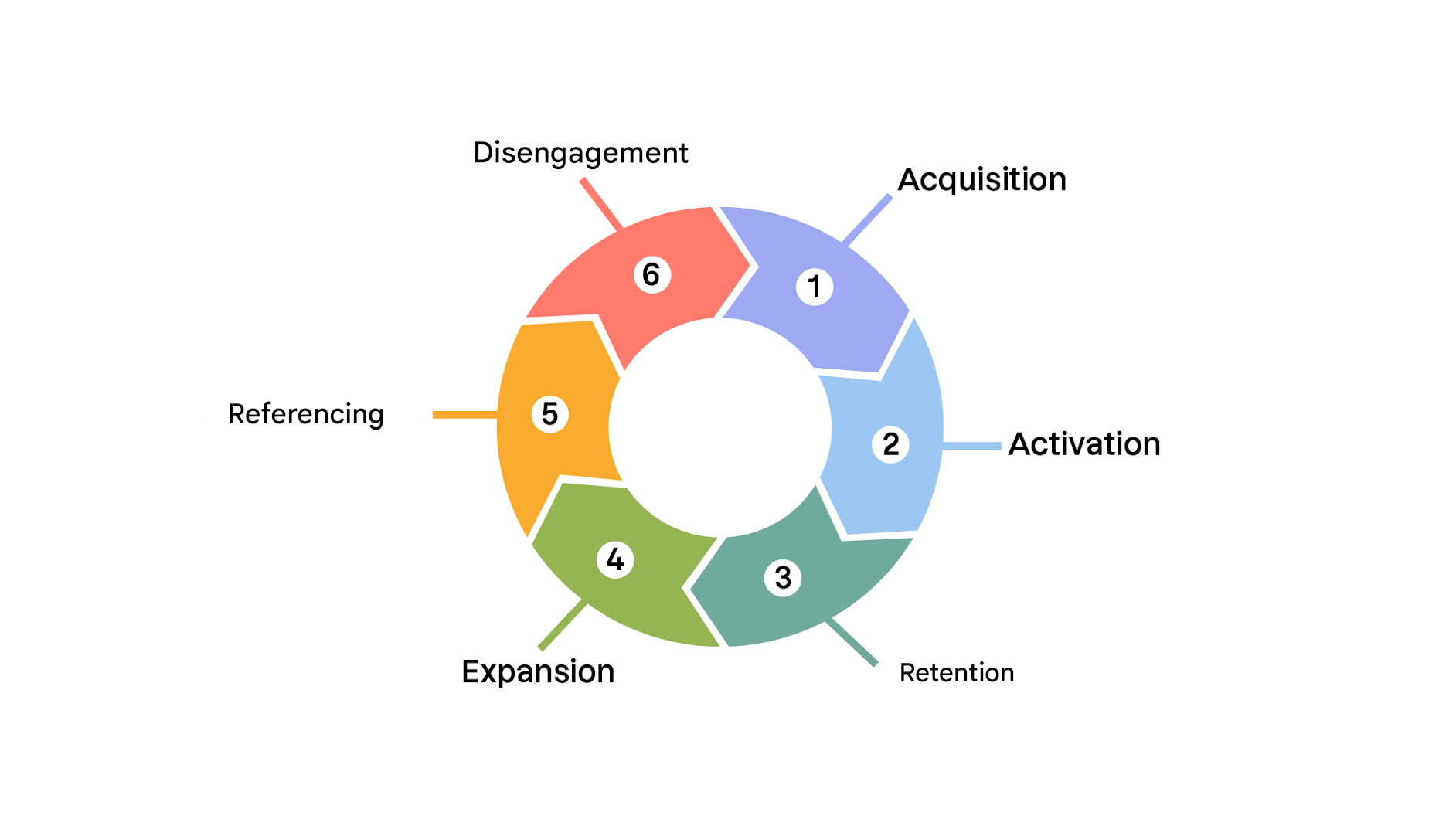
The cycle helps businesses understand how to attract, retain, and develop a lasting relationship with their customers.
If they aren’t buying from us yet, are they really a customer?
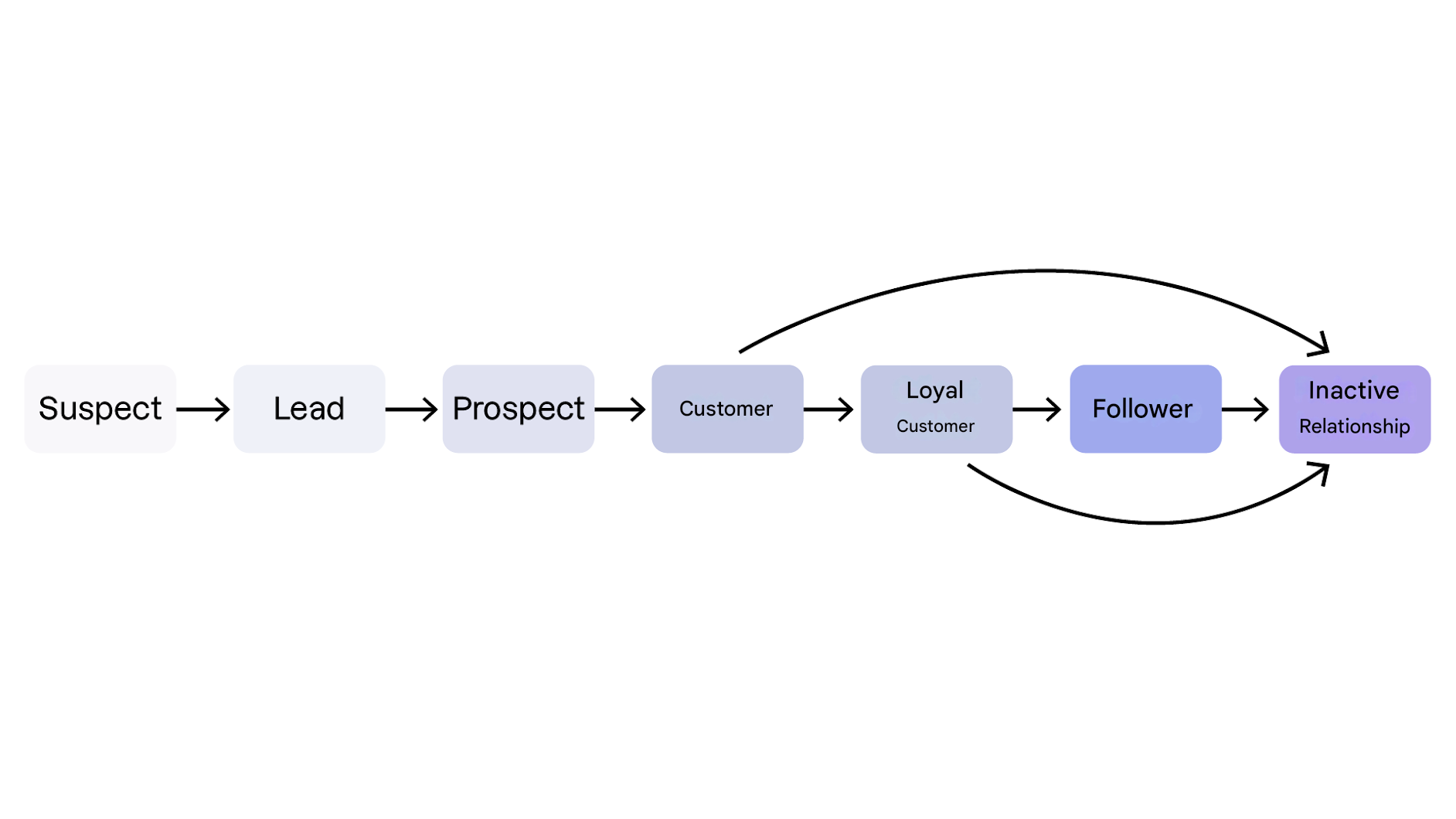
No, the goal is to turn them into customers. Their status changes depending on where they stand in the lifecycle. In the US market, these stages are typically referred to as:
Unqualified Lead: Someone who might be interested but has shown no clear intent.
Marketing Qualified Lead (MQL): A lead who has shown initial interest.
Sales Qualified Lead (SQL): A potential customer whose needs match what your business offers.
Customer: The person has made a purchase.
Repeat Customer: They return to buy again over time.
Promoter: A loyal customer who recommends your products.
Inactive Customer: Former customers who no longer engage.
How do we support customers throughout their lifecycle?
Your business must interact with them through their preferred channels. This is where a Retail Sales Associate stands out a true chameleon capable of adapting to every contact channel the business uses.
These channels can be physical (stores), telephone-based, or digital. A business may have one or many. When multiple channels are used simultaneously to improve the customer experience, we call this an omnichannel approach.
Is it the same for business customers?
Absolutely. In sales, we differentiate between individual customers and business customers:
Throughout this chapter, we’ll use the example of a fictional company operating in both B2C and B2B markets.
This business is NexTrendish, a fast-growing fashion retailer. Here’s what you should remember:
It operates its own stores and e-commerce site and also distributes through multi-brand retailers and independent boutiques.
Your mission as an omnichannel associate is to attract new customers while strengthening existing relationships.
You will prepare and conduct prospecting using various digital and phone channels, personalizing each interaction for a smooth and engaging experience.
Now that you understand the context, let’s begin contacting customers.
Prepare Digital and Telephone Prospecting Activities
NexTrendish uses both digital and telephone tools to reach its B2B prospects and customers. José, the Sales Director, knows from experience that preparation is essential for a successful prospecting campaign — like an athlete warming up before a competition.
To begin exploring the business, you work with the data already available in the company’s CRM.
Your first task is to gather the information needed to accurately target prospects. For example, you might target stores that showed interest in the brand but haven’t placed an order yet, or stores that carry only a specific product line, or customers filtered by size, location, sales activity, or expressed needs.
In our example, you are contacting independent boutiques whose commercial relationship is becoming inactive — they haven’t placed an order in over six months.
Here is an excerpt from the company’s (fictional) database:

In the CRM, you perform a search using two criteria:
Independent stores
Last order placed more than 180 days ago
The system then displays all matching results:

Now that you've got your contact list, it's time to familiarize yourself with the various methods and tools available in the business.
Distribute Informative Messages Via Digital Channels
For a start, your manager, Sonia, has asked you to distribute informative messages via digital channels.
Whether these contacts are made via emailing, SMS, or social networks, a good knowledge of uses and methods is essential for impact and efficiency.
Let’s focus on email outreach using the AIDA method:
AIDA consists of four phases:
Attention: Capture the customer’s attention with a strong subject line or visual.
Interest: Create interest by presenting the product’s advantages.
Desire: Build desire by showing why the product is unique or essential.
Action: Prompt the customer to act through a clear call to action.
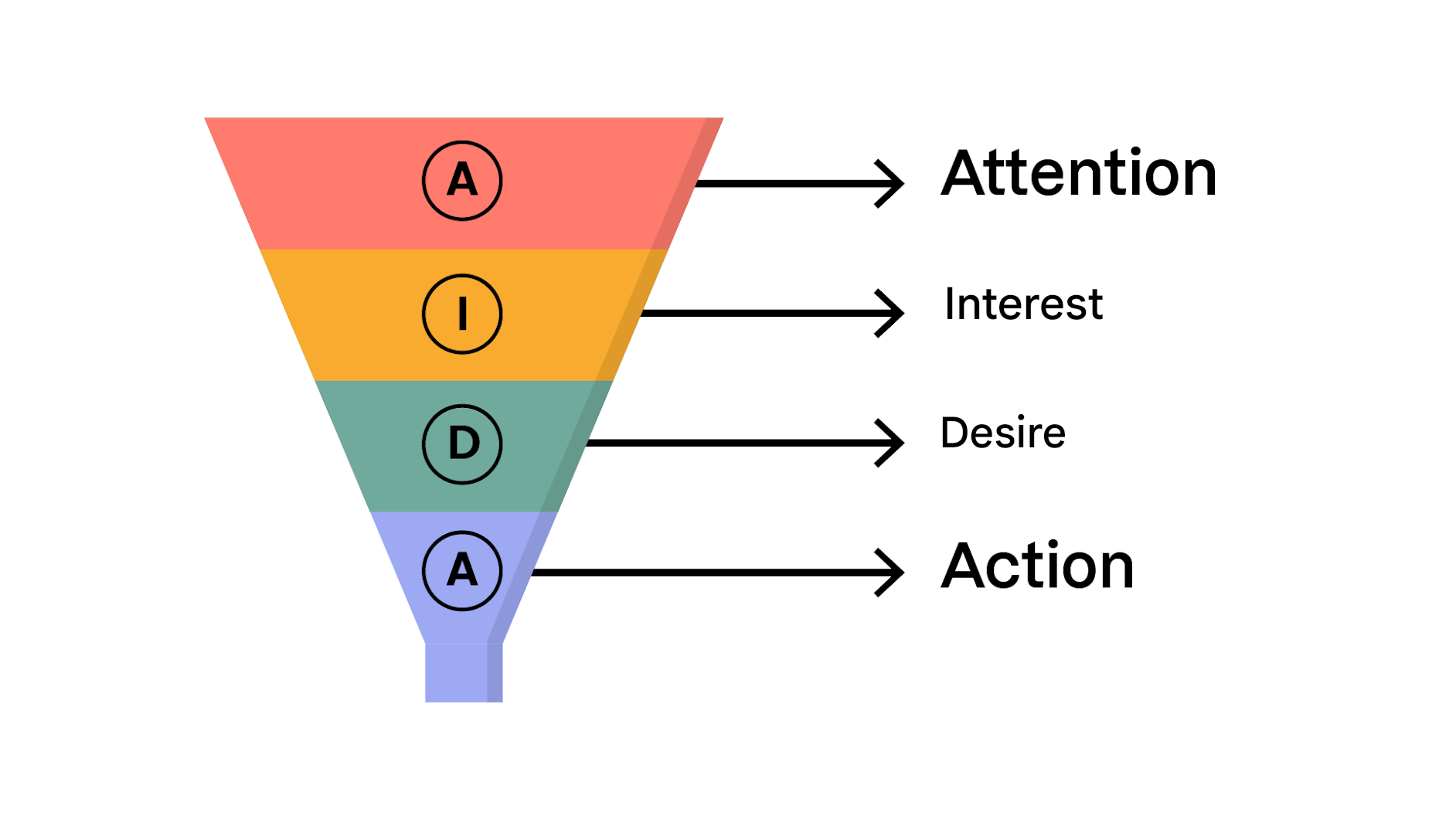
Here is an example of an outreach email. Does it follow AIDA?
Subject: Rediscover NexTrendish — Collections that fit your customers!
Hello [Manager’s Name],
I hope you're doing well. I’m reaching out because we’ve recently launched new collections that could be a great addition to your current assortment.
At NexTrendish, we’re committed to offering high-quality, on-trend fashion products. Our latest lines have been very well received, and demand continues to grow for the styles you typically offer.
We also noticed that your boutique hasn’t ordered from us in a few months. We’d love to show you our new collections — they could help attract new shoppers while delighting your regular customers. We’re offering exclusive partner promotions on these lines, which could further strengthen your store’s appeal.
Would you be available for a quick phone call or meeting in the coming days? I’d be happy to discuss how we can work together to support your sales goals. You can reach me by email or at [phone number].
Thanks for your time — I look forward to hearing from you soon!
Best regards,
[Your Name]
[Your Position]
NexTrendish
[Phone]
[Website]
This email applies AIDA as follows:
Attention: Strong subject line + personalized opening.
Interest: References to new collections and market demand.
Desire: Highlights the benefits for the boutique.
Action: Clear invitation to schedule a call or meeting.
Conduct Telephone Prospecting Calls
While phone outreach is more time-consuming and costly than automated digital channels, it offers a much higher level of personalization. You can adapt in real time to the customer’s reactions, answer questions, and remove concerns — leading to stronger engagement.
These methods can be used individually or combined into a prospecting plan. Their characteristics differ widely:
Contact Type | Estimated Cost per Contact | Possible Volume | Average Efficiency |
Digital media | Very low cost (~$0.05 per contact) | Large-scale volume | Low response rate (~0.5%) |
Direct mail | ~$1 per contact | High-volume campaigns | Low efficiency (~0.5%) |
Telephone | Higher labor cost (~$7 per contact) | Medium volume (50–150 calls/day) | Higher efficiency (2–4% sales, 15% appointments) |
Face-to-face | High cost (~$40 per contact) | Low volume (4–8 contacts/day) | High efficiency (10–20%) |
To improve your phone interactions, Sonia emphasizes the importance of using a structured call script.
To build your script, you will use the CROC method, adapted for a US audience:
CROC consists of:
Connect: Greet the customer, verify you're speaking with the right person, establish rapport.
Reason: Briefly explain why you’re calling.
Objective: Clarify what you hope to achieve (e.g., understanding needs, reactivating purchases).
Close: Thank them and guide toward the next step (booking a meeting, sending materials, etc.).
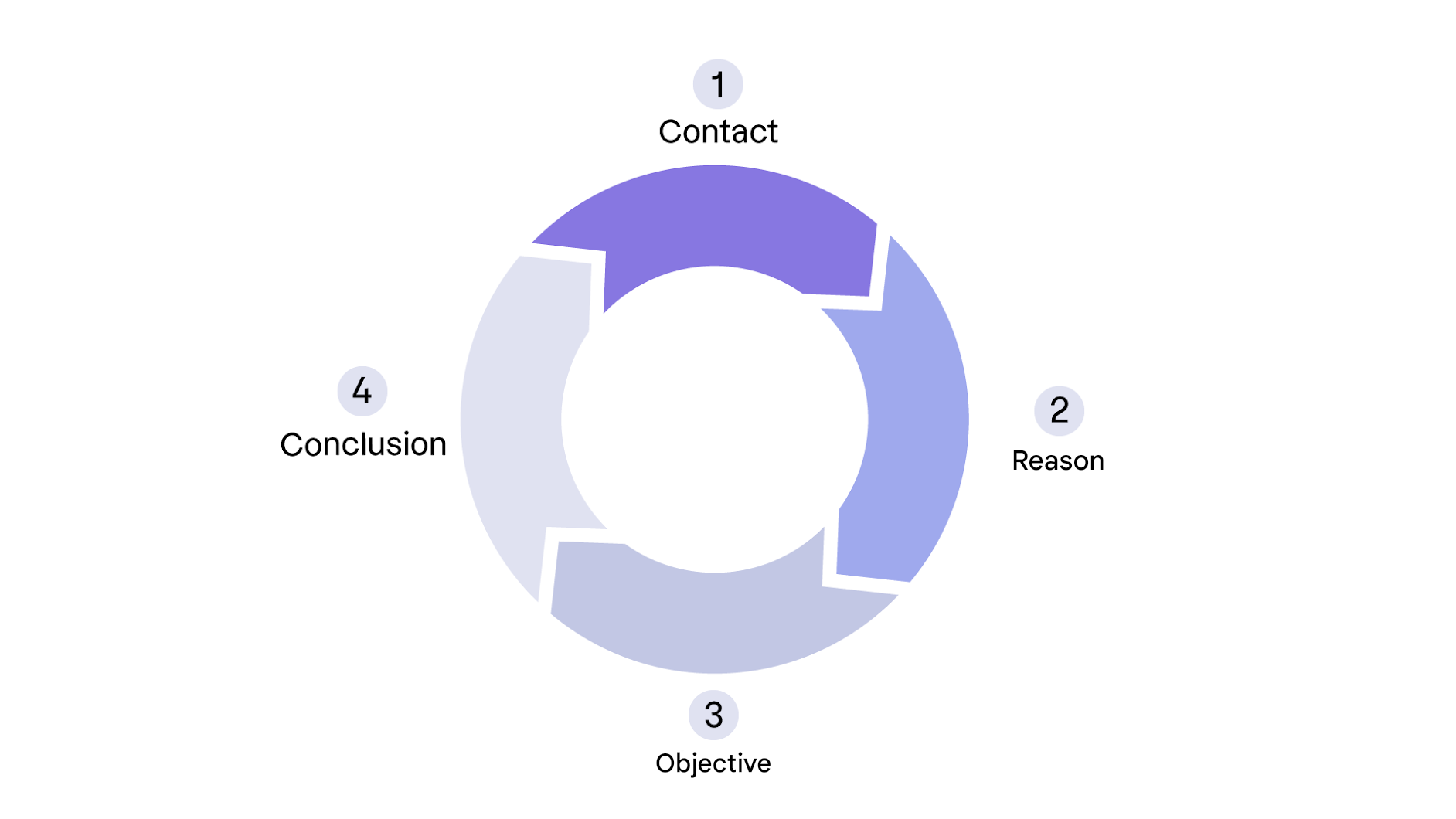
Here is a commonly used script shared by one of your colleagues:
Hello [Manager’s Name], this is [Your Name] from NexTrendish. How are things going for you today?
I’m calling to check in and see how business has been lately. We noticed you haven’t ordered any NexTrendish products in over six months, so I wanted to make sure everything is going well on your end.
I understand managing an independent boutique can be challenging, especially with increasing competition. At NexTrendish, we’re committed to supporting our partners in meeting their customers’ needs. Have you received any customer feedback about our products?
I also wanted to let you know that we’ve launched new collections that might be perfect for your clientele. We’re offering some great partner promotions to help boost your sales. Would you be open to exploring these options together?
If you're available, I’d be happy to schedule a phone call or in-person meeting to discuss new opportunities. When would work best for you in the next few days? Thanks for your time — I look forward to connecting again soon!
This script applies the CROC structure effectively:
Connect: Establishes rapport by checking in on the store’s current situation.
Reason: Clearly states why the call is being made.
Objective: Presents new options relevant to the customer.
Close: Offers a clear next step (meeting or follow-up call).
Of course, a script alone is not enough — the associate’s tone, attentiveness, and attitude are just as important.
Whatever channel is used, Sonia reminds you to always apply the Customer Courtesy Principles (formerly SBAM): a warm greeting, attentive tone, polite closing, and consistent professionalism across all interactions. Even in writing or on the phone, warmth and clarity make a real difference.
With the right methods, practice, and tools, you’ll be able to guide customers smoothly through their buying journey and build lasting relationships based on trust and understanding.
Over to You!

Context
NexTrendish is launching a new eco-friendly collection aimed at retailers the company hasn’t previously partnered with. After an initial digital campaign, several prospects requested additional information through the website.
You’ve recently joined the business as a Retail Sales Associate in a part-time program, along with another new associate, Robin. Your shared mission is to follow up with prospects who expressed interest.
As you listen to Robin’s phone call with a prospect, Mr. Chaban, you notice several areas where he struggles. What advice could help him improve?
Instructions
Review the transcript of the phone call.
Identify the areas Robin needs to improve in order to gain performance and efficiency.
Summary
A Retail Sales Associate is a specialist in customer relationships.
They must carry out a wide variety of tasks across multiple channels.
Regardless of the channel, proven methods such as the Customer Courtesy Principles, CROC, and AIDA help structure interactions.
Customer relationships evolve — understanding lifecycle stages is essential.
A Retail Sales Associate must be adaptable, offering a seamless, personalized, and professional experience to every customer.
Now that you understand the foundations of the Retail Sales role, let’s explore one of its most exciting aspects: creating an engaging omnichannel customer experience!