Build Your Recommendations

Define Your Recommendations
Here are some tips for formulating your recommendations:
Specific: To be effective, your recommendations must be clear and specific. They must define concrete actions that can improve the testing process.
Adaptive: They must be adaptable to Business Needs and Test results, and reviewed regularly to ensure they remain relevant.
Goal-aligned: Suggestions must be aligned with the expected quality and test coverage goals. They should support achieving objectives and meeting functional requirements.
Here’s an example:
TO: MOA, AMOA, PO CC: Project team Subject: Test Strategy Delivery |
Hello! Attached to this email, you’ll find the Test Strategy for the Project Name and its version. Here are the key points to remember:
I would like to draw your attention to the following alert points:
Please feel free to contact me if you need further information, Kind regards, ME |
Express Your Recommendations
Get your pencils out: write down whatever comes to mind in raw form. For now, this is just for you.
Write down any notes that could impact the progress of the Test Campaign.
What issues should I raise at this stage?
Excellent question!
Here are a few things to think about:
Consistency with project goals: Check that the Test Strategy aligns with project goals and covers all features and requirements.
Does the test plan cover the entire expected Scope?
Is there any part of the Scope that cannot be tested? Why?
Realistic test planning: Ensure planning is realistic and achievable within the given timeframe and with available resources.
Do you have enough time to complete the project?
Does the team have enough Capacity to do?
Example: The campaign is estimated at 50 production days, but the team only has 20 days available.
Note the difference between “time” and “Capacity to do”:
Time is calendar-based: “We have 3 weeks to run the campaign.”
In 3 weeks of execution, we can place X effort points. One point corresponds to a predefined number of days in the organization. That is the Capacity to do.
Available Resources: Validate that your resources allow you to run your campaign:
Will the test environment be available?
Is the test assets library up to date?
Are automated tests ready?
Write Up Your Recommendations
Now it’s time to write and format the recommendations you identified earlier.
Each recommendation deserves to be expressed. Follow a few project and communication best practices:
Be clear and precise: Use simple, understandable language for all team members.
Adapt your writing so everyone can understand it.
Prioritize alert points: Rank your recommendations by priority according to their project impact.
Example: Not having a test environment is more critical than missing an automaton for part of the Scope.
Propose solutions: Each recommendation must include practical, achievable solutions. They must fit the project constraints and available Resources.
If actions are needed, they must be assigned to someone and time-bound:
Example: Test automata are not up to date ⇒ Update action assigned to Martin, delivery expected next Monday.
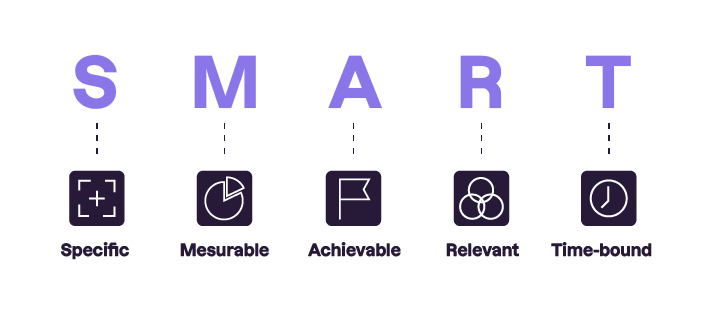
Your actions must follow the SMART rule (Specific, Measurable, Achievable, Realistic, Time-bound) and be tracked (e.g., in an Excel spreadsheet).
Share with the team: You can share your identified points with the Test team and Developers beforehand. This increases engagement, ensures relevance, and may help uncover solutions you hadn’t identified.
Over to You!

Context
Edouard thanks you for your planning and for taking Andy’s vacation into account.
To finalize this phase of the Test Strategy, you suggest drafting a summary email in which you share your observations and notes—particularly regarding the late notification about how order details would be stored.
Instructions
Write your recommendations, taking into account all relevant factors identified during the Test Strategy phase.
Summary
Recommendations are suggestions to improve an area where you identified a gap or alert.
They must be based on factual elements—not assumptions.
Raise any points of caution necessary. Don’t allow instability to harm the campaign.
For each point, define a SMART action. If you’re unsure, work with the team to find solutions.
You’ve completed all the thinking and planning in this chapter. Now it’s time to move on to building the test plan.