Integrate the Features of Functional Specifications

Discover Functional Specifications
Functional specifications… They’re about to become your new best friends in your professional life. You’ll love them just as much as you’ll hate them.
I’ve heard a lot about them, but when will someone finally explain what they are?
Don’t worry! Here’s the short version:
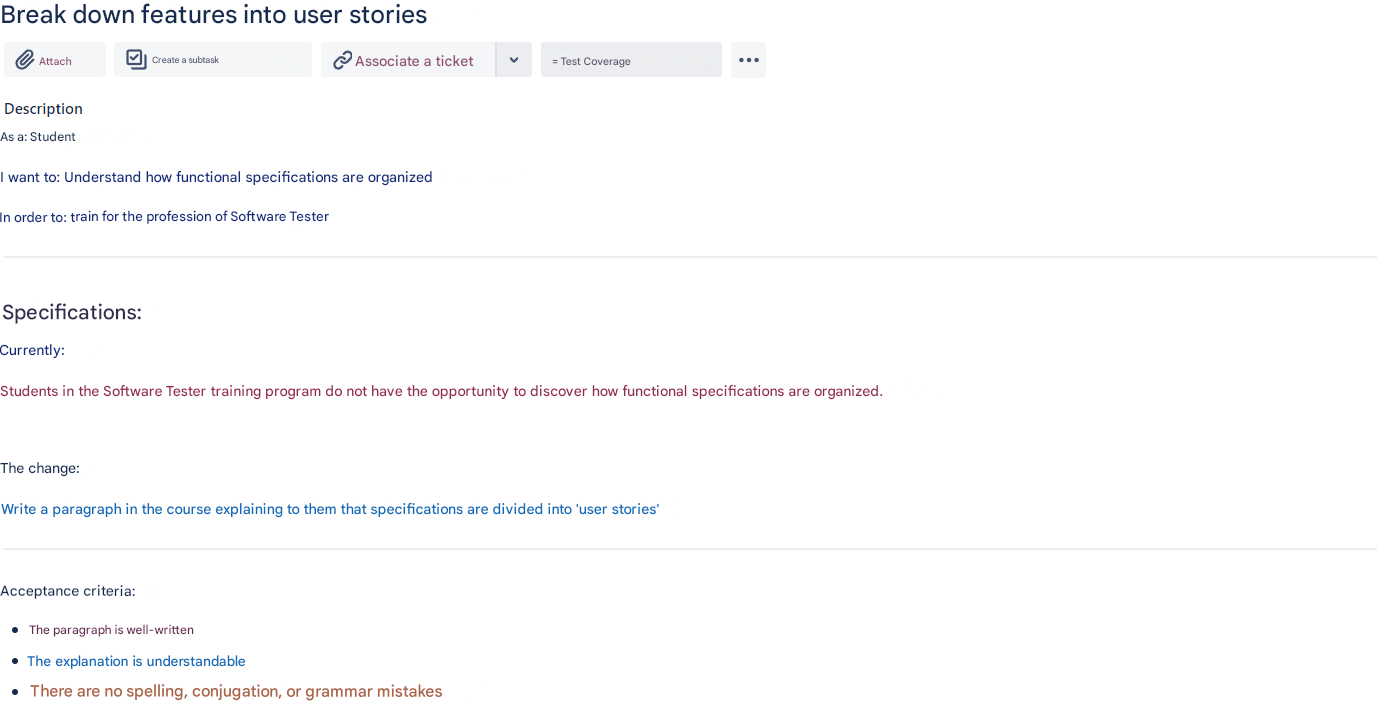
Functional specifications are generally organized into “User Stories,” which describe system or software features from the user’s point of view. They outline what the system should do, how it should do it, and the expected results.

Functional specifications are used in software development to describe the requirements and features the software must provide to meet user needs. They can include detailed descriptions of features, use cases, performance and security requirements, user interfaces, test scenarios, and any other information relevant to development and validation.
Functional specifications are a key element of project management. They guide software design, development, and testing. By following them, testers can ensure that the software meets user expectations and that it operates efficiently and reliably.
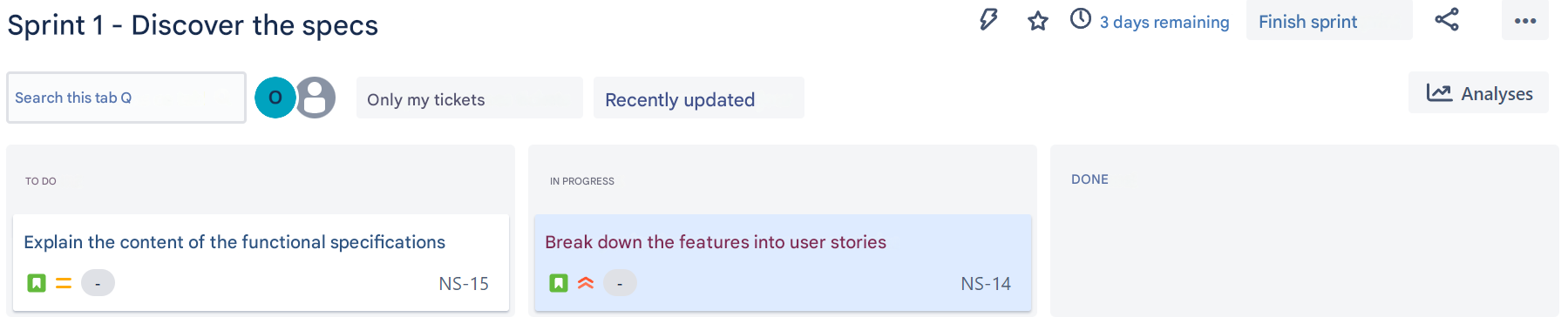
Identify the Structure
In an agile environment, functional specifications may look different from what you see in traditional approaches. Here are some of the elements you’ll generally find:
User Stories: Short, simple descriptions of features from the user’s perspective. They focus on user needs and goals rather than technical details.
Acceptance criteria: These define the conditions under which a User Story is considered complete once tested. They can include quality, performance, security, and usability expectations.
Mock-ups: Drawings that represent the feature’s user interface and illustrate how the user interacts with the system.
Automated tests: Included to ensure that each feature is automatically tested as it is developed.
Time and cost estimates: These help the team plan and prioritize the work.
In agile methodologies, functional specifications are considered a living document that evolves throughout the project. This helps the team adapt quickly to changes and stay aligned with user needs.
Here’s an example: On one project, an application screen was frequently updated and changed names several times.
There were two ways to access it—one button on the application we were testing, and another through a different application we also managed.
When reading the specifications, I noticed something odd: only one access path was documented!
I checked with the developers to confirm whether they had identified the second path.
They hadn’t—so we avoided a defect and a redo in development.
The takeaway: You matter, your experience matters, and the functional knowledge you’ve built (or will build) is invaluable. So speak up when necessary.
Understand Functional Specifications Through a First Reading
Like the balloon salesman who turns his house into an aircraft, the key to success is to step back and look at the big picture!
You can now focus on analyzing the functional specifications. Your first objective is to understand the project Context and identify where it’s heading.
Okay… but where do I start?
This was THE question I asked my trainer when I first started. I was used to only executing tasks without asking too many questions—but that changes quickly in an agile environment.
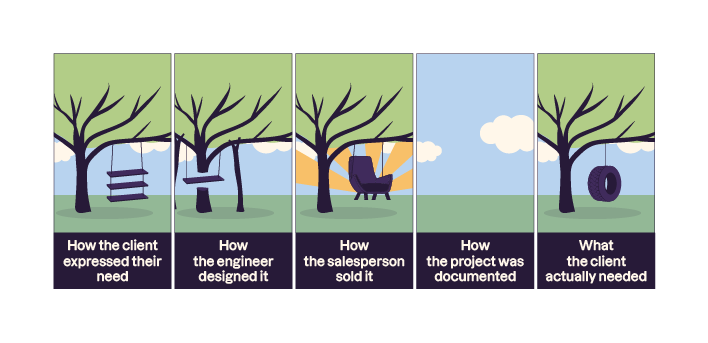
You may be familiar with the “seesaw syndrome,” that classic illustration showing five stages—from “What the customer asked for” to “What they actually needed.”
During your first reading, aim for a high-level, unbiased perspective.
Here are a few tips:
Take the time to understand the Context: Before diving into the details, make sure you understand the project’s Context—its users, objectives, and constraints.
Review the main sections of the functional specifications: Identify the major components to get an overall sense of the content. This might include features, use cases, performance and security requirements, usability considerations, etc.
Focus on the important sections: Identify which parts matter most for testing and project delivery User Stories, acceptance criteria, mock-ups, and time/cost estimates.
Identify key terms: Pay attention to terminology and acronyms used throughout the document. Note anything you need to look up.
Analyze requirements in detail: Read them carefully to understand expectations and system behavior. Make sure acceptance criteria are clear and check that requirements are complete and consistent.
Identify gaps and questions: Track anything that may need clarification from the Product Owner or stakeholders.
Over to You!

Context
You are part of an agile team in a company that specializes in paper sales called “We’re Tooled Up!”.
The Business wants to upgrade its website so customers can order reams of paper directly—without going through the sales team.
Your team is composed of a Product Owner, Édouard, three developers, and then Andy and you for Testing.
The project is called CLC (short for “Ciao les commerciaux”), and you’ve received the functional specifications shared by Édouard. You’re taking your first look at them now.
Instructions
You've received the functional specifications and are reviewing them.
Your mission is to:
Write a short summary of the project’s stakes and objectives;
Raise a few questions or points for attention.
Summary
Functional specifications are generally divided into “User Stories,” which describe system functionalities from the user’s perspective.
Take the time to understand the Context before diving into detailed specifications.
Focus on the most important sections for testing and delivery.
Identify key terms and acronyms used throughout the document.
Now that we’ve explored why functional specifications matter, let’s widen our perspective by looking at how requirements flow into features.