Find Out More About Testing Campaigns

What is a testing campaign?
A test campaign is a set of coordinated activities designed to evaluate a software product or system and confirm that it meets specified requirements. A campaign usually consists of a series of tests planned in a coherent, structured manner to cover the system from different angles.
Test campaigns are often carried out in dedicated environments and planned according to project needs and the test strategy. Test results are logged and analyzed to identify defects and confirm that the software meets both functional and non-functional requirements.
They can take place at any stage of the development lifecycle—from unit tests all the way to end-user acceptance tests, including integration and system tests.
In short, test campaigns validate specific features or behavioral changes, while the test strategy coordinates the overall testing process.
Do you remember the software testing process from the previous section? Here it is again. 😉
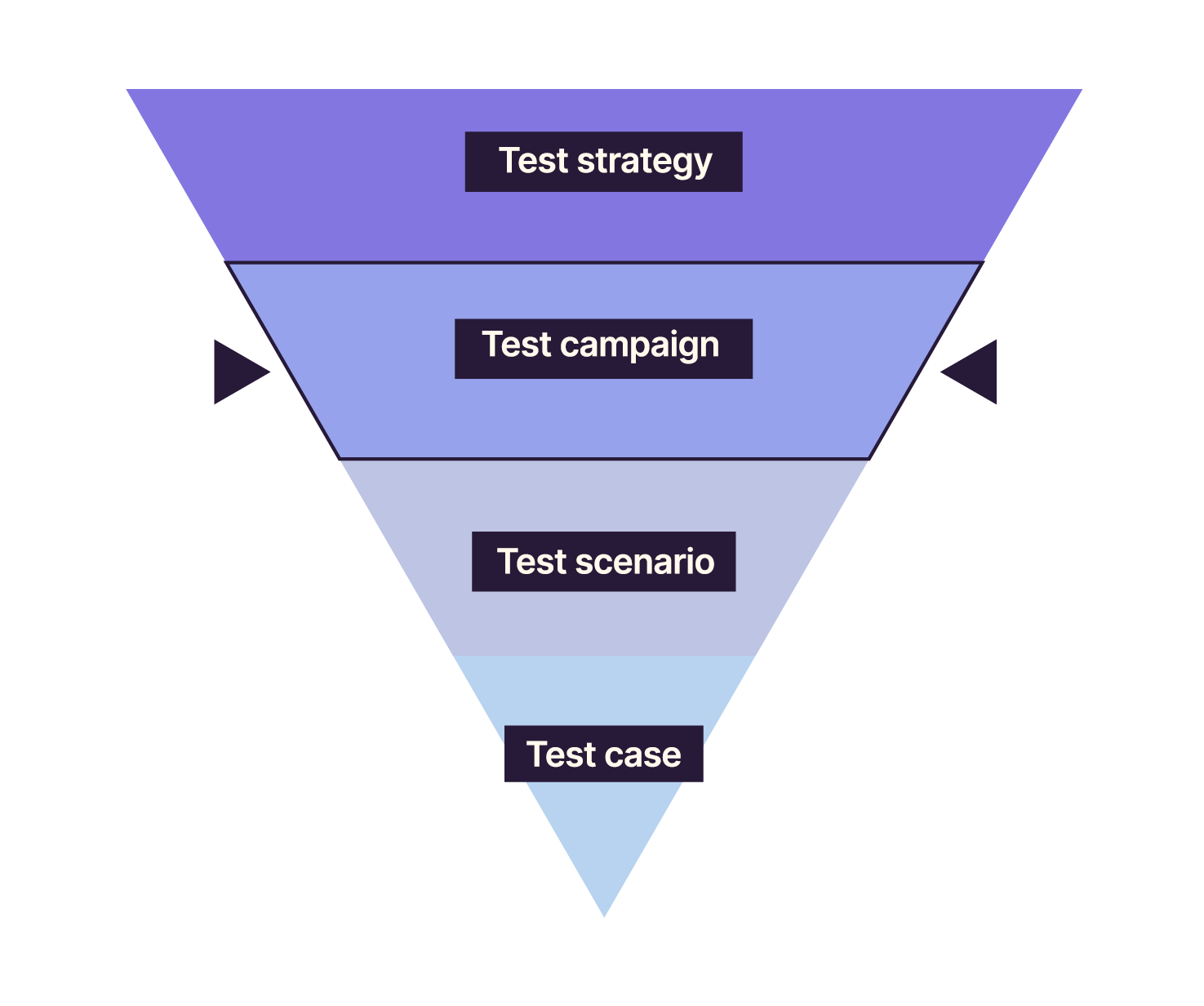
The outcome of each test level informs the next, ensuring requirements are thoroughly tested and overall software quality is met.
Identify Different Types of Test Campaigns
There are several types of test campaigns depending on their purpose, coverage, complexity, and level of automation. Here are a few examples.
Smoke test campaigns
They are part of the global testing strategy and are often used to verify whether a new version or feature is stable enough for deeper testing.
These quick, basic tests check whether the system is operational after an update, deployment, or major code change. They can be manual or automated and focus on essential features.
They help save time and resources by detecting critical issues early, accelerating both development and testing activities.
Regression test campaigns
These campaigns are run after software updates or modifications. Their purpose is to ensure no new defects have been introduced and that existing functionality continues to work correctly.
They check for unwanted side effects and confirm that updates did not break previously working behavior.
Regression tests may be manual or automated; automation greatly improves speed and consistency.
Implementing a regression testing strategy is recommended for all development projects to minimize the risk of introducing new defects.
Validation or acceptance test campaigns
These ensure the software meets stakeholder expectations. They are carried out before production deployment to validate compliance with the requirements defined in the specification.
They may include business validation tests, UI tests, performance tests, and security tests. Scenarios often simulate real user workflows.
They should be performed in an environment that closely mirrors production to avoid surprises during deployment.
Run the Campaign Defined Upstream
A test campaign takes place over several sequential steps.
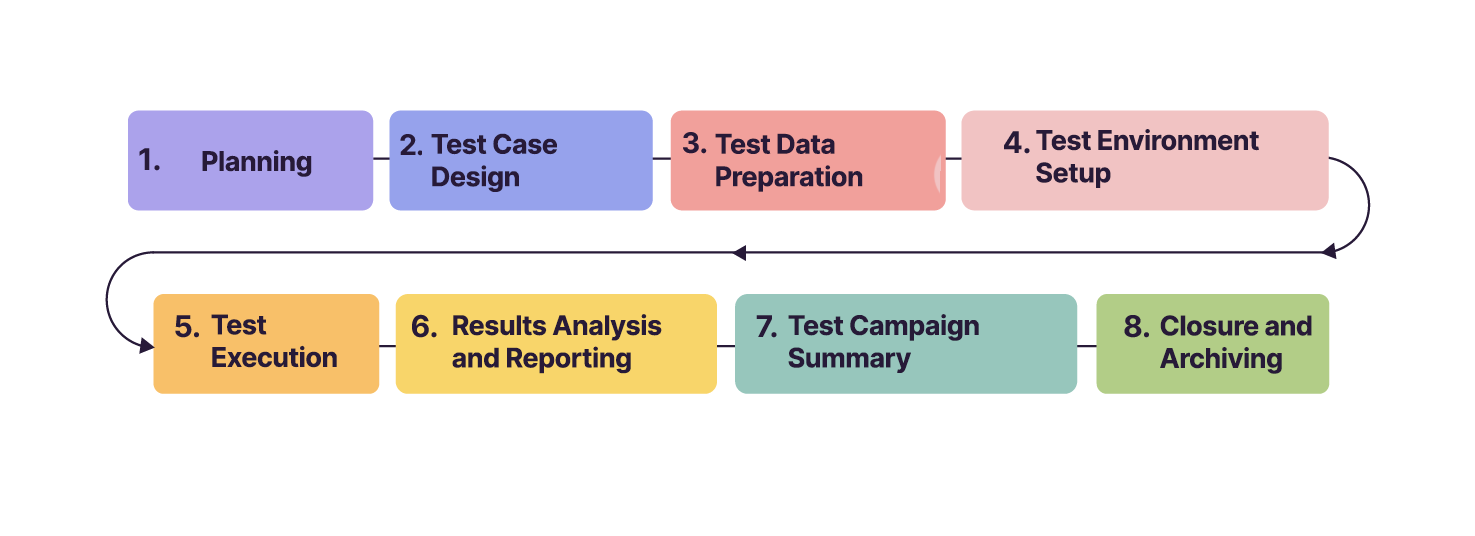
Here are the general steps involved in executing a test campaign:
Planning: Define objectives, schedule, and required resources.
Design test cases: Build structured test cases covering all relevant functionality—whether from the test plan, exploratory sessions, or automated tests.
Prepare test data: Gather any prerequisite data needed for execution.
Configure the test environment: Set up an environment that closely resembles production.
Execute tests: Run test scenarios and cases. Record all results, including any defects found.
Analyze and report results: Determine whether tested features meet requirements. Log, analyze, and track defects until resolution.
Write the test campaign report: Summarize results and identified defects.
Close and archive: Evaluate test results and document lessons learned to improve future campaigns.
Over to You!

In this activity, you will run a mini test campaign.
Use the test plan available in test plan format .xlsx), and follow these objectives:
Validate the gardening blog’s behavior for the following four features:
responsive design,
dark mode,
category search,
pagination.
Identify and document defects so they can be fixed before production.
Follow the test plan.
Find no critical defects.
Summary
A test campaign is an organized set of planned tests used to validate one or more aspects of a system.
There are several types of campaigns depending on their objectives, coverage, and complexity.
Executing a test campaign requires several structured steps.
Now that you’ve learned how a test campaign works, let’s move on to analyzing the campaign data.